


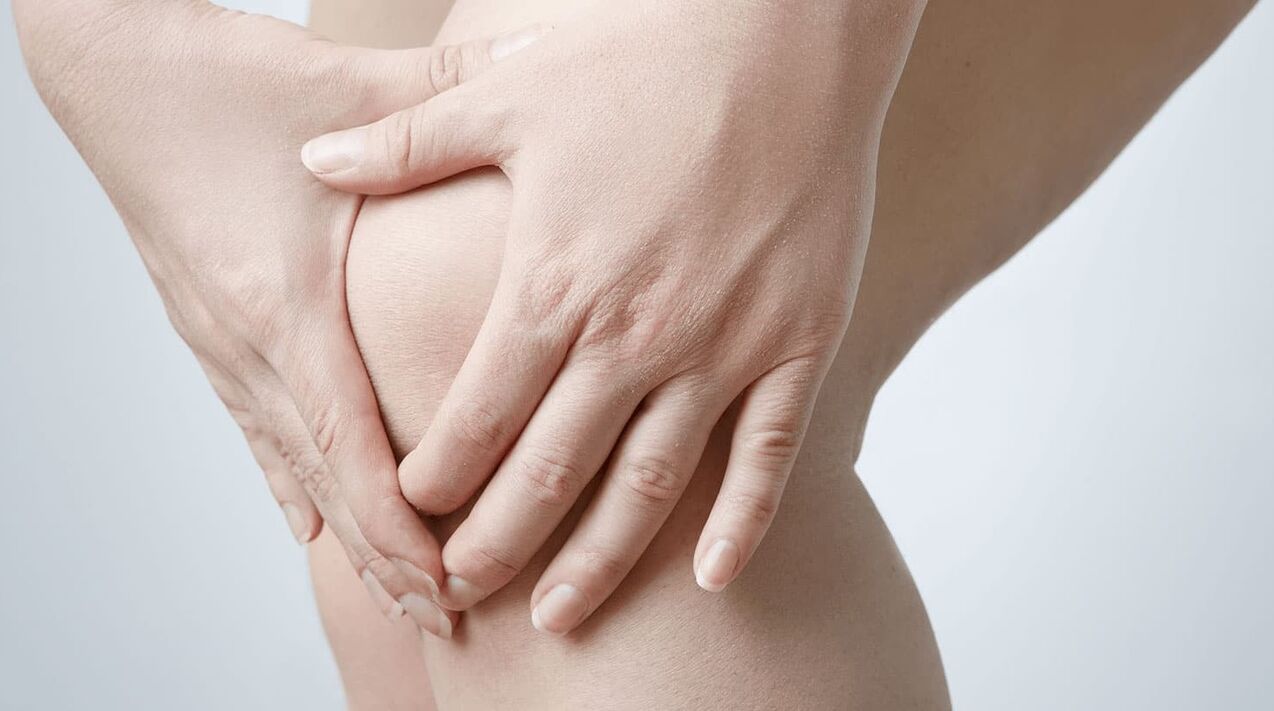
The knee joint is one of the most complex joints in the human body.Such a "complex" device, combined with constant stress, makes the joint very sensitive.
In this regard, it is not surprising that throughout life, at least once, each of us has experienced pain in the knee - dull, aching, sharp, numb or even unbearable.Sometimes unpleasant sensations bother people only when they walk or bend and straighten their legs, in some cases - regularly.
The nature of pain in the knee joint, as well as the causes that cause it, can be very different;in this article we will try to understand in detail why the knee hurts and what to do in this case.
Causes of knee pain
Pain in the knee joint can be caused by an injury or be pathological in nature.Sometimes this is a symptom of a serious illness, which can be determined by the nature of the sensation and a number of other symptoms.
Among the most common reasons why knees hurt are the following:
- Arthritis of the knee joint is an inflammatory disease.It can be either an independent pathology or a symptom or complication of other diseases.
- Osteoarthritis of the knee joint is a degenerative process with the destruction of joint tissue;over a long period of time it causes deformation and deprives the joint of its ability to move.
- Due to injuries due to a very strong blow to the knee, hitting it against a hard object or falling.In this case, the joint is excessively damaged and bends abnormally.
- Ligament Damage - Any activity that involves physical exertion can lead to a knee injury.This often happens during sports and active recreation, and immediately the pain is felt and the joint swells.If this happens, it is necessary to exclude further stress on the injured leg until medical assistance is provided, so as not to aggravate the injury.
- Meniscus damage.The meniscus is a rounded piece of cartilage in the knee joint that is easily damaged by a sudden knee bend or twist.The doctor diagnoses this cause after a personal examination, ultrasound and X-ray.
- Bursitis.Many people wonder why their knees hurt when they bend.There can be many answers to this question, but sometimes it is usually excess fluid formation in the joints, or rather in the bursa where it is located.The pain is not localized and can often spread to nearby areas, even up to the toes.Bursitis can occur in an acute form, but it often becomes chronic.Acute bursitis manifests as sharp pain in the leg above the knee or in the knee itself, redness of the skin and severe limitation of leg mobility.Accumulated fluid is easy to find even through the skin;the swelling has a clear outline.
- Pain occurs when a cyst forms under the knee (Becker cyst).The formation occurs in cascades as a result of an inflammatory process previously observed in the knee joint.Substances that accumulate during inflammation of the joints penetrate into the tendon area of the base of the neck and are localized inside the fossa.
- Tendonitis (inflammation of ligaments and tendons) is characterized by swelling and discomfort in a specific area.It is aggravated by flexion and extension of the knees and contraction of the muscles associated with the inflamed tendons, and radiates to the surrounding muscles of the leg and thigh.
- Ischemic pain - occurs due to reduced blood flow to the knee joint.The cause can be a sudden change in weather, prolonged cold weather and too much exercise.As a rule, the pain is localized symmetrically, that is, in both knees, has the same intensity and does not affect the mobility of the joints.
Acute or chronic knee pain that occurs should not be ignored, so you need to consult a doctor.After the analysis is completed, the specialist will tell you what to do in a particular case.Treatment may include tablets, ointments, massage, physical therapy, and surgery.
Analysis
First, the orthopedist examines the patient's painful knee, performs a range of motion test, and collects blood counts to make an accurate diagnosis.In addition, the doctor may prescribe the following tests:
- Instrumentation - with radiography.Ultrasound, CT scan, MRI or densitometry.
- In the laboratory, general and biochemical tests, smears and blood tests for bacterial microflora, serum tests, bone marrow and synovial fluid are taken.
- Invasive procedures include arthroscopy.
Based on the results of tests and observations, the specialist makes a diagnosis and tells you how to treat knee pain in your case.
Treatment of knee pain
Doctors can determine why joints hurt.Therefore, a timely visit to a specialist is an important factor in quickly and correctly eliminating the problem that has arisen.However, whatever the cause of knee pain, the first thing to do is to reduce the stress on the joints.Often during periods of acute pain, the patient requires bed rest followed by mobilization of the leg.It is recommended to use a cane or crutches when walking and to wear soft and comfortable shoes.In some cases, the doctor prescribes orthopedic insoles.
At home, the main medical treatment for knee pain is injury prevention, painkillers and anti-inflammatory drugs.The form of release of these drugs can be different (gel, cream, ointment, injections, tablets).A specialist prescribes one or another of the drugs depending on the type, degree and location of the damage.
- NSAIDs are most effective in relieving pain and inflammation.But they have no effect on the cause of the disease.
- If your knee is swollen and painful, an ice pack will help.You can take an ice pack and apply it to the damaged area.After some time, the pain will start to subside.
- Chondroprotectors, on the contrary, do not reduce pain, but with long-term use they promote the restoration of damaged cartilage tissue, restore joint function and reduce the number of relapses of the disease.
- Applying a bandage can also help.But you have to be sure that it can be done for your injury, otherwise you can only make the situation worse.
- If your knee hurts when you sit in one place for a long time, you need to move around a bit.Sedentary lifestyle or sedentary work is very dangerous - there is a risk of gaining excess weight, which will put stress on the knee joint, and also all the time without movement is very harmful, the knees become stagnant.
Drug therapy is usually supplemented by a course of physical therapy.This allows you to quickly relieve pain, shorten the course of treatment and reduce the dose of medication.
It is no less important to follow a diet - eating a plant-based diet rich in vitamins, fish dishes and seafood helps to restore joint cartilage.And of course, when the pain can be overcome, we must try to ensure that it does not return: live a healthy lifestyle, strengthen the body and do not put too much stress on it.